
LIMB- LENGTHENING
Limb length equality in the lower limb is not simply a cosmetic issue, it also is a serious functional concern
The short leg gait is awkward, increases energy expenditure because of increased vertical rise and fall of pelvis and may result in back pain.
CAUSES OF LIMB LENGTH INEQUALITY
- Trauma
- Infection
- Asymmetrical paralytic conditions e.g. POLIO and CEREBRAL PALSY
- Tumors
- Juvenile rheumatoid arthritis
- Post fracture hypervascularity
- Idiopathic unilateral hypoplasia or hyperplasia
- Assessment for rotational and angular deformities
- Foot height differences
- Scoliosis
- Pelvic obliquity
- Joint mobility and function
Shortening Procedures Lengthening of the short limb is the optimal treatment, but technical difficulties and frequent combinations of lengthening procedures have made epiphysiodesis a more attractive option for small discrepancies in growing children. In adolescence limb shortening is safe and simple with low complication. Joint stiffness is rare Disadvantages
- Normal limb is operated
- Cosmetically displeasing
- Degree of possible shortening is limited because of the inability of muscle to adapt too shortening of more than 5cm.
- Final height is unacceptable
This is theoretically the best option and our method of choice is ILizarov technique Acute long bone lengthening. Salter transiliac rarely used. Lengthening by slow distraction, the older procedures Putti’s 1921 technique. Wagner monolateral fixator DeBastiani (orthofix) ILizarov
COMPLICATIONS OF LENGTHENING BY ILIZAROV
|
|
|
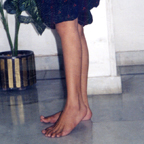
(a)before surgery |
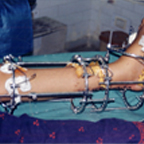
(b) With the fixator on |
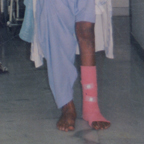
(c) limb- length equal |
RADIOGRAPHS OF LIMB LENGTHENING OF OTHER PATIENT 5inch lengthening of leg. | ||